Ask five people in your company how a supplier gets approved. You will probably get five different answers, two confident shrugs and one “let me check with Sarah.”
Nobody is being difficult. The real process lives in a diagram from 2021, a PDF nobody can find and the memory of whoever has been around longest. It exists everywhere except the one place you can actually trust.
That gap is exactly what a Digital Twin of the Organisation (DTO) is built to close.
So what is it, really?
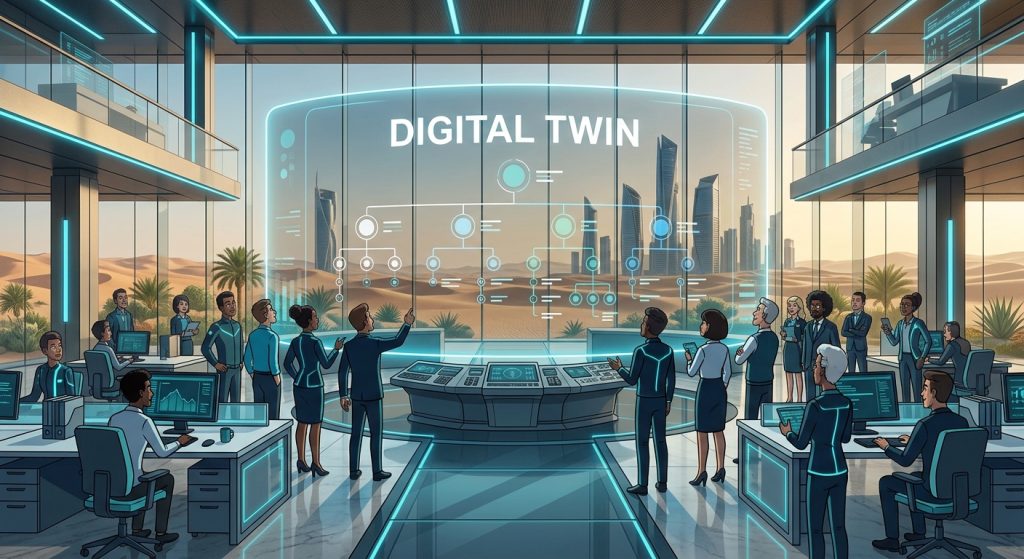
Forget the science fiction. A DTO is a living digital model of how your organisation genuinely works: processes, roles, documents, risks, controls and systems, all connected to each other.
The word that matters is connected. Interfacing describes a DTO as a representation that stays aligned with how work is designed and governed today, not how it was documented six months ago.
Think of the difference between a printed map and live traffic. A flowchart tells you where the roads are. A twin tells you where the jam is, and what happens if you close a lane.
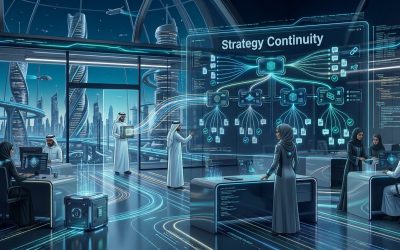
And unlike a printed map, it does not go stale the moment someone edits a process. When a role, a control or a document changes, the twin shows you what else moves with it.
What it is not
A DTO is not a dashboard. It is not a one-off modelling project that starts gathering dust the week after launch. And it is not a folder of neat diagrams sitting far away from the real work.
A dashboard shows you the score, but not how the game is being played. Without structure underneath, visibility just gives you false confidence.
Three moments a twin pays for itself
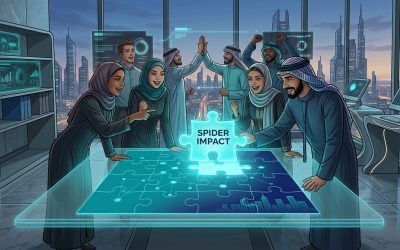
When something changes. A regulation is updated. A process is redesigned. Usually, someone sends a few emails and hopes for the best. With a twin, you can see which documents, roles, controls and training sit downstream before you approve anything. Interfacing’s regulatory compliance management turns regulations into requirements linked to the processes they affect, so changes do not surprise anyone later.
When the auditor walks in. Audit season feels very different when you can trace a requirement to its process, owner, risk and control and evidence in a few clicks. And when something does go wrong, a CAPA can be raised straight from the finding, with the fix flowing through to the SOP and the training.
When you want to test before you commit. Process mining shows how work is actually running, including the delays, the rework and the workarounds. Simulation then lets you try a redesign on the model before you try it on your people.
The people side
There is a human benefit too. Every organisation has that one colleague who holds a whole process in their head. When they go on leave or move on, everyone else scrambles.
A twin turns that private knowledge into something shared and current. New joiners can see who owns what and how work flows from day one, so they become productive sooner. Handovers stop being a treasure hunt. And your experienced people spend their time improving the work instead of explaining it again.
How Interfacing builds it
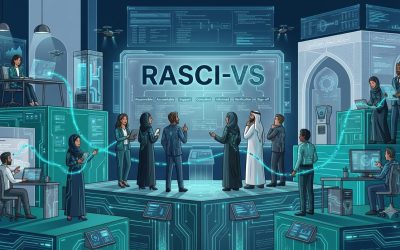
Interfacing’s Enterprise Process Center® (EPC) puts the process at the centre. Process models show how work flows end to end and who owns each step, with RASCI-VS making every role clear. Risks, controls, documents, regulations and quality events then attach to that backbone, all inside one Integrated Management System.
Two more things separate a twin that lives from one that becomes shelfware:
- Low-code workflows run the work inside the governed structure, so automation never turns into a rogue side project.
- AI helps with drafting, spotting gaps and flagging impact, but it stays human-in-the-loop. People review and approve.
Interfacing also reports that it has been recognised as a Leader in Gartner®’s inaugural Magic Quadrant™ for Digital Twin of an Organization Platforms, which says a lot about how seriously the category is taken.
Where to start
Do not try to model everything. Start where change is frequent, regulation is heavy or risk is high. A sensible first step is to pick one end-to-end process that causes the most headaches, map it properly and connect its owners, documents, risks and controls. Once people see one process behaving like a living model, the appetite for the next one tends to build by itself.
Put process owners, quality, risk and IT in the same room, because a twin built by one department is just another silo with a smarter name.
Where CCG comes in
CCG delivers and supports Interfacing’s EPC across the UAE, KSA and Oman. If you would like to see what your own organisation looks like as a twin, we would be glad to show you. Seeing your own processes in a twin beats any slide.
So if you asked five people tomorrow how your most important process works, how many would give you the same answer?
Crystal Consulting Group
Email: sales@crystalconsultinggroup.com
Web: crystalconsultinggroup.com
UAE: +971 50 526 1369 | KSA: +966 54 165 1531